Mrs.D's Store

Showing posts with label An Interview With MRS D. Show all posts

Saturday, May 10, 2014

An Interview With Author Olga D’Agostino: Everything In Life Can Be Chronicled.

Originally published in Novel Ideas  by Nick Wale


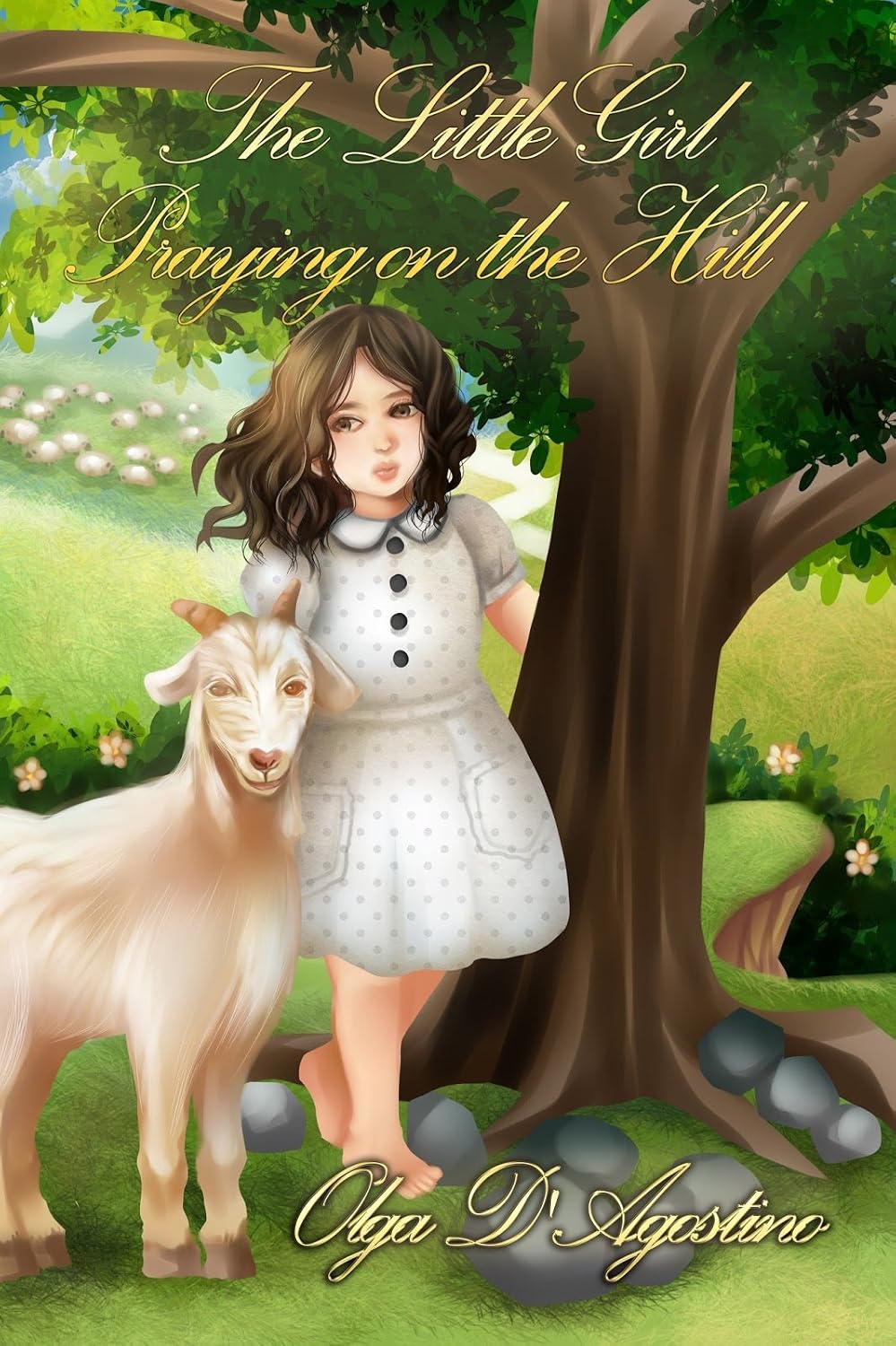
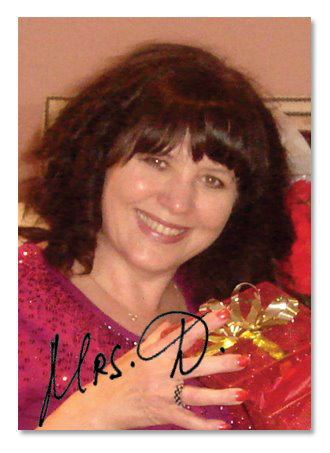
Olga D’Agostino (or MRS. D. as you may know her) is a bestselling author of children’s books and short stories. Her books are enjoyed by children the world over, and she has just released her first short story entitled, “The Little Girl Praying on the Hill.” Her bestselling children’s book, “The Trees Have Hearts,” will be on sale over the next week! You will be able to get a copy of this wonderful E-book for 99 cents. If you, like me, enjoy great books, you will want to get a copy of this one.
Author

An Interview With Children’s Author Olga D’Agostino


Q) Good morning, Olga!
Good morning!
Q) How do you find “inspiration” for your stories and, for those who can’t find it, where does it live?
Inspiration lives everywhere: in everyday life, nature, people, animals, books, art, and the past. I am older now, and I have a storehouse of memories. Sometimes it is hard to go back in time and recall everything, but once I’ve pushed my “refresh button,” there is no way out. My inspiration tortures me until I convert my memories into a story.
Q) What really inspires you as a writer?
Countless little things can inspire a writer to write a great story. Inspiration is a fantastic feeling, and a good writer knows how to bring it to readers. I think life experiences provide the most interesting inspirations. The older I get, the more things inspire me. I was always a nature worshiper. I absolutely adore the beauty and power of the natural world. I love to observe it in action: wild, unleashed, destroying or healing, soothing or comforting. Nature is an amazing muse for any writer!
I also look around me. I watch people, recall events, dig into my past, reread books, think of interesting facts, and the most significant events I have lived through. I try to find inspiration in answers which did not make sense when I was younger, or attempt to discover it in things which are foreign to me. I strive to imagine how these elements will fit my story, how they will connect to the reader, how they will mix with the modern world, and how they will interact with my memories, which are still inspiring me to this very day. My memories feed my imagination the most.
Q) How interesting! So when did you first consider yourself to be a writer?
I do not consider myself a professional writer. I would rather call myself an inspiring storyteller. I write spontaneously. I like to catch moments, small chapters from life. I feel more productive when I write from the heart, when I do not have to think about a deadline or how many people will like or dislike my book, or whether it will be a bestseller or just collect dust on a shelf. I write because writing has been a part of me for so long that I feel as if we have become inseparable friends who cannot live without each other.
Q) What makes a great cover for an “inspired storyteller”?
A cover that grabs a reader from the first glance and sparks an interest in a book. A cover that represents the story, intrigues, and captures one’s interest. A cover that stands out from the crowd, unique and different. A cover that makes the reader stop and buy a book. With this said, the artwork on the cover should never overpower the story. It should be simple but attractive. It should lure the potential reader into holding the book, and make them want to know more about the story. My advice: hire a professional. A writer is not the same as a designer.


Q) But as a writer, you are creative, even if you aren’t a designer. Where do those concepts come from?
As a children’s writer,I love beautifully illustrated books. It is easier for me because I work with the illustrator from the very beginning. First we complete the artwork and then we choose the cover from the illustrations we have created. If we do not find one that fits the story the best, then we create a new illustration, which brings the book to life. The cover should speak to the reader. It should be a sneak peek inside the story. It should guide readers to the story before they flip through the pages.
I know I have achieved my vision for my children’s books through the art of a very talented illustrator, Chanoa, who has illustrated most of my books.Her amazing covers are full of color and fun. In print, her artwork looks fantastic, vivid and gentle, amusing and pleasant to the eye. Chanoa’s talent is apparent in each stroke of her pen. She likes to create adorable, mischievous characters in light pastel colors. She is an extremely ambitious, creative, and talented young artist, who always impresses readers with her ​​beautiful and unusual artwork. She is also excellent when she works in the realistic style. Experienced with both dark and light colors, Chanoa continues to work on my series of books on Carlo the Mouse and a few other books. She also created the sweet cover for my new book, The Little Girl Praying on the Hillmy first short story for adults.
Q) How many times have you started a story without finishing?
I have a few unfinished books that desperately need my attention. I am not worried about their future, because I know where I want to take the reader. Sometimes the story comes to my mind and I put it on paper, then something else distracts me or I lose my focus, or just have no time to work on the new story. Paper does not ask for food. So I let it sit on my desk until I get around to it.
Q) Who is the most inspiring individual you’ve ever met?
My mother, a simple peasant woman, who did not have the chance to become who she deserved to be. A woman who has great compassion for people and a huge hunger for knowledge. A woman who sacrificed herself for others. A woman who pushed herself to the limit so her children could live their dreams. A mother who was always there when we needed her. I only wish I were half as great as my mother.
Q) How did you find your writing style?
I think the style found me. By nature, I am a romantic soul, who is drawn toward romances and nonfiction novels. When I write for children, I mix two styles: realistic fiction with modern fantasies. Usually, I twist true events with unrealistic characters, which teach children to conquer problems, build self-esteem, and overcome challenges.
Q) Can you define success?
I am happy where I am now. I like my privacy, and for that reason, I do not want to be famous. I write books because I want children to develop a taste for reading, learn life’s lessons, and just have fun while learning something. I also want to spark discussions between children and parents. I want children to shower their parents, grandparents, and teachers with questions about important things and everything they find interesting in my books. I want them to grow into readers for life.
Q) So, for you, what is a writer’s heaven?
Library, bookstore, thrift stores, nature, a small old town, an escape into the centuries of ancient streets, a cozy hideaway with tiny coffee shops, sipping a freshly brewed espresso and watching people walking by, sitting with a notebook on the steps of the old church and watching the world passing in front of one’s eyes. Maybe the empty beach,a great place to unwind and work under the music of waves. The majestic mountains would put any writer into the mood. It is an amazing feeling to be in touch with nature, listening to the whispering wind as it spreads the aroma of wildflowers. It certainly stimulates the senses and helps one to write good stories. There are many tiny havens for any writer.
Q) Can you tell me what your new book “The Little Girl Praying on the Hill” is about in ten words?
The Little Girl Praying on the Hill” is a story of hope, strength, deep emotions, and determination to find a way to survive in a world that is so beautiful and yet so sad.


Q) How often have you read another writer’s book and said, “I can do better than that” to yourself?
I do not judge other authors for their work. If I do not like a book, I do not waste my time reading it. Each reader has different taste and needs. What is good for one reader may not be a perfect read for another. Sometimes a great book comes to the wrong readers and is slapped with an awful review because it happens to fall into the wrong hands—maybe a pessimist who is frustrated with life or has other issues, or one who does not appreciate or understand a certain writing style. I do not write bad reviews. I always remember how much time, effort, and money it takes to publish one small book. If I like a book, I will definitely let the author know how much I enjoyed his or her work.
Q) Do you have any advice for newbie writers?
Everything in life can be chronicled. You just have to have the guts to do it. A writer’s worst enemy is self-doubt. I strongly believe that the best stories live inside each of us. Look around and write! Let your imagination see the world! Make your story uniquely yours. Write what you know, write what you feel, write what you love, write because you want to.
When you are ready to publish your book, do your homework and make sure your book is professionally edited. Create a professional-looking book, one which will not get lost among the millions of poorly published books. Make your book one that you would want to buy for yourself or for your child. If you are a children’s writer, forget your age and envision your book as children would. Get involved in each illustration. Nobody knows and feels your book better than you do.
Writing is the easy task; publishing and marketing is a business. These days, an author must also be a smart businessperson. To be a self-publishing author, you will have to learn every aspect of publishing. Lastly, when you publish your book, you will wish that a day had 48 hours, because there will be no time left for writing. Writers today must be very business-oriented and be devoted to social media to promote their books. So do not quit your day job yet. Wait until you become famous. Don’t give up! If you really believe you have something to say to the world, SAY IT!
Q) Do you find time to write every day?
I do not write just to write. I do not write to create a few thousand words each day. I write when I feel, when emotions slowly transform themselves into words and then quickly overload my mind, forming sentences and paragraphs, until I let them out. I write when I am in a happy, sad, angry, or melancholy mood, or just have something to share with the reader. For me, writing is rewarding, almost therapeutic. It consumes all my bad energy, making me feel alive and vibrant. It is as if I escape to a beautiful oasis, where I can reconnect with my soul.
Q) Do you go through a lot of drafts?
Because I am perfectionist, I review my drafts many times. Usually, my first instinct is always on target. I may feed it a little bit with extra words or change some sentences or paragraphs, but I try to stick to the original version as much as possible.
Q) To what extent is your fiction autobiographical?
My new story,The Little Girl Praying on the Hill, has many emotional ties to my early childhood. It is based on memories of my life in the Soviet Union in the early 1960s.
Q) How do you know when a chapter is “just” right?
I rewrite my chapter until it flows smoothly and reads effortlessly. When I finish one chapter, I let it sit for a while. Usually, I work on another project to distract myself from the story. When I feel it’s time to go back, I read the chapter again, and if it reads easily, then I have it right. If not, then I rewrite it again. Sometimes, I let my friend (a fellow author) or my husband read it. He is very critical and honest. Writing can be stubborn and cause many sleepless nights.
Q) How do you like to write? By the pool? On the bed? In the car? What’s your heavenly writing situation?
I think about stories in the most unusual places, but I write them in my sunroom where I have set up my writing table and where I feel most comfortable. I only share this room with my cat, who is very protective of my old computer.
Q) Do you feel supported as a writer?
I am blessed with my friends and family, who are very supportive of my writing, especially my husband, Patrick, who loves literature and appreciates good books. He was the one who discovered my writing and pushed me to publish my stories. He is not only my biggest financial donor but he also contributes a lot of his free time to help me improve my English and organize all my book events.
Since I wrote my first story, my two daughters, Viktoriya and Veronika, have also become a huge part of my journey. They are very devoted to my work and attend every event and book signing. Some of the local businesses are supportive, too. They’ve organized a few memorable book signings and author’s days for me. They’ve also invited me for book festivals, book readings, and events in schools and libraries. Sadly, the big local bookstores in my area do not support self-publishing authors.
Q) How do you think your new book will be received by readers?
I think The Little Girl Praying on the Hill will be received well. It has a deepness, which makes readers think. I hope it will plunge them into the life of the young child and make them think about their purpose on this earth. Through the eyes of the child, they will see two different worlds: sad reality and beautiful imagination. I believe stories like this could help growing generations better understand life and the human spirit, and help them value what they have. It may change their views about the disadvantaged and the forgotten.

MEET THE BOOK! 


Monday, April 14, 2014

Interview with Mrs.D: What Did Not Kill Her, Made Her Strong


Originally published in  Nick Wale of Novel Ideas 


Q: How would you describe your writing style in two sentences? 


A: A mix of realistic fiction with modern fantasies. A twist of true events with unrealistic characters, which teach children to conquer problems, build self-esteem, and overcome challenges. 


Q: How long does it take for you to write a chapter? 


A: The illustrated children’s books are short, but the writing process is long and challenging. A children’s author must create a story that will make sense to a child and parent, and teach them something useful. There is no room in children’s books for extra explanations or expressing deep thoughts, as there is in adult books. Most of the stories are less than a thousand words. I usually break those rules and write longer stories. Children like the sound of printed words. Why deny them the language that stimulates their imagination? Of course, it depends on the child, age, and personality. 
I like to write for both groups. It is much easier to write for adults than children. I rewrite my story until it makes perfect sense and carries a clear message to the young readers. Children are tricky readers. By nature, they are very impatient, so the author must create a story that will keep a child’s attention from beginning to end. Then the mission is accomplished. Writing for children is not how many words your write daily; it is about the quality of words the author seeds in their minds. Children’s books can raise readers or leave them crippled for the rest of their life. Sometimes it takes weeks to rewrite one paragraph, and sometimes it takes a few days to complete an entire story. 


Q: What is the best part of the writing process for you? 


A: Writing for children is like playing a game: you win or you lose. There is no middle ground. I must surround myself with their imagination. I must go to their level and see the story from their viewpoint. Children have a most unpredictable imagination and hunger for knowledge. If I do not get their attention from the first paragraph, then I have lost them. I must also see the story from the viewpoint of their parents. It is hard to be a grown-up and child at the same time, and that is why writing for children is not an easy task. What I like most about writing for children is reliving the special moments, when I feel as if I am a child again. When my story makes me laugh or cry, then I know I got it right. In my opinion, children’s books must teach both child and parent. 
However, as much as I like creating stories, my best part is working with the illustrator and watching the characters come to life. It is a very intensive, but thrilling process. First, I write notes for the illustrator and describe each character and scene. Then, based on descriptions, the illustrator creates the characters. We go back and forth frequently with the first sketches until we get it right and we are both satisfied. After that, the illustrator is working on the sketches and I keep writing. It takes a long time before I see how the illustrations will appear in book form. Before the coloring stage, we correct every small detail. Each illustration must represent the story correctly. Usually I do not see the coloured illustrations until they are completed. Once they are coloured, I can finally see my words transformed into pictures. However, the work does not stop there. We still correct images, check faces for consistency, and other small elements that we may have overlooked during the sketching stage. Sometimes it takes time and sometimes it goes easy, but it is worth our sweat and efforts, because a child who spends time with a well-written and well-illustrated book will want to read it over and over, and eventually will grow into a lifelong reader. 


Q: If you had the opportunity to get a message across to a lot of people—what would that message be? 


A: I cannot say it better than I wrote in one of my books, The Trees Have Hearts: 


Stop your busy life for a moment and take time for you and your child. Close your eyes and go to a special place, where everything is simple and pure. Cuddle with your child on the green grass or golden sand… stare at the beautiful blue sky… listen to the splashing waves… spin around in a blooming garden or talk to the whispering wind. Look around you and see what is important in life and to your child. 


Stop and breathe… Be a child for a moment… Dive into their imaginary world, where you can hide in the shadows of blossoming trees. Do not lose this precious time together; our children grow so fast and I believe that these special moments are given to us for a reason. Hug your children every chance you get; reassure them that they are loved. They have their worries and fears, ideas and solutions as we do. Our children need us to be present in their dreams. Try to listen and hear what they are hearing and see what they are seeing. Love simple things with an open heart and you will receive unconditional love. Teach your children, lead them through their life, but let them run free in their imaginary kingdom. 


Q: Do you ask yourself questions or do you settle for what you know? 


A: I am a restless soul. I need to know as many things as my poor brain can handle. My mom said I was a very determined child, always hungry for knowledge. When I was in first grade, the teacher gave us homework to write a tricky letter, which we learned that day. Back in those days, we learned calligraphy and wrote with an ink pen. I could not get that tricky letter right, and I asked my mom for help, but she was too busy working on the farm. I struggled all evening, and then the electricity went off and I went to sleep. Mom cheated, and did my homework at night using a kerosene lamp. The next day the teacher gave it a huge “1”=“F”, the worst and only bad grade I ever received. I did not go home after school. I was sitting under a bridge, writing hundreds of letters until I ran out of paper and ink. I was writing that letter on the ground until I got it right. It was deep night when my father found me under the bridge still practising my writing. I do not think I ever settled for anything in my life. I like challenges. 


Q: When it’s all said and done—will you have said more or done more? 


A: Don’t we all? Yes, I am as guilty as anyone. If I could, I would. But as my grandpa would say: after the battle, there’s no need to swing fists. What is done is done and what is said is said. A word is not a bird; once you let it go, you can’t catch it. Usually I try to fix things and put them behind me. It is not fun to sleep with a restless conscience. 


Q: Which activities make you lose track of time? 


A: I am a child of nature. I grew up in the Carpathian Mountains and love the outdoors. I love the forest and the wind. I was always fascinated by the trees, the way they care for each other, the love they share, and the wisdom they have. I am a wind-worshiper. I can listen to its soothing whispers all day, taking my mind away from this earth. I love walking on the beach when the world is sleeping. I find peace in the splashing waves, which are calming and comforting, recharging my soul and body. I love the coolness of the morning breeze, brushing my shoulders and hair. I love getting lost in old cities with narrow streets and glorious buildings, thinking of people who walked on the same side of the road as I do. I love spending time with history in museums, antique or thrift stores, libraries and old bookstores. I would love to get lost in many places, but the reality is that life often takes me in different directions. 


Q: What’s your single greatest moment of personal failure? Looking back on it now, did it make you weaker or stronger? What did you learn? 


A: Life is an ocean of problems with tiny sparkles of happiness. Over the years, I learned that every one of my failures was a blessing in some way. I am who I am now because I failed many times, and every time I fell on my face, I learned something. I learned how to fight life. I did not necessarily like it, but each of my failures made me get up and look for a new way out. It forced me to move forward and pushed me closer to my destination. I cried, I complained, and I hated it. I doubted my strength, my dignity, my ability. “Why me? What have I done wrong? Why don’t things work my way?” I thought I would never forget my devastations. But God always works in mysterious ways; as soon one door closes, a second door opens. Now, looking back at my failures, they look more like successes, a good graduate school. As my grandpa would say, if you want to get somewhere, you must move; if you want to cross the river, you must wet your shoes. Simple and true. 


Q: Joy is found with simple awareness. What does your joy look like today? 


A: I am a grandmother now. I am blessed with two beautiful grandchildren and one more on its way. I finally have time to sit and play with my grandsons. Moving from place to place, country to country, job to job, I missed many beautiful moments when my own children were young. I wish I could reverse time and have these moments with my girls. We can have all the wealth in the world, but we cannot buy back the lost moments. The older I get, the more I value time with my family and friends. 


Q: If your life was a novel, what would be the title and how would your story end? 


A: The story of the little girl praying on the hill would finish the way she was dreaming. She found the way out and finally felt loved. Life beat her everywhere she turned, but like most children from her village, she survived. She left home when she was 16 and went looking for a better life in different places. She did not return home for a long time. She hated that God-forgotten place, surrounded by beautiful nature, but rotten to the last bone. Once in a while, she came back to check on her mother, still suffering from an abusive man. When she became a mother, she finally understood why her mom never left her father. Recently, her family sent her a picture of the vanishing village she was born in. She smiled. She was glad that this hideous place was coming to an end. God did not want to answer her prayers when she was a little girl, but He finally took care of this disintegrating place. Finally, it is disappearing from the face of the earth. Yes, God made a mistake and dropped her in the wrong place, but now she knows why He did it. She would never become the person she is today if she had not learned His lessons. Every day she thinks how blessed she is. She pulled herself out of the life that almost destroyed her. It was not easy to survive in this unfairly divided world, but what did not kill her, made her strong. This is my title... 


To learn more about Mrs. D., please check out her Amazon Author Page   or visit her website: www.mrsdbooks.net


Please stop by WWW.MRSDBOOKS.NET


Wednesday, April 9, 2014

Something Special For Your Children And Grandchildren


ORIGINALLY PUBLISHED IN Alexcordnews

Something Special For Your Children And Grandchildren!


I want to share this interview with you all. MRS. D is an award-winning children’s author who moved from the Ukraine to the United States of America. She brought with her some wonderful ideas about children’s books and the desire to write them. It’s important that we teach our children to read and I think I’m safe when saying that MRS. D agrees with me when I say that books can be the best friend of a child.
Enjoy this interview and don’t forget to download a copy of her charming book “The Trees Have Hearts.” It’s FREE at the moment on Amazon and every download will make more children aware of the wonders of reading.

How would you describe your books? Do you write in more than one genre? What are they?
When I write, I never think into what genre my story will fit. A good story always finds its place and reader. I often mix realistic fiction with modern fantasies. I think these two styles describe my books best. I twist true events with unrealistic characters, which teach children to conquer problems, build self-esteem, and overcome challenges in their lives. They also show young readers the beauty and power of nature and help them learn about the true meaning of friendship and family. It also helps them better connect to the surrounding world and care for our younger friends, the animals. I do not think that mixing two genres confuses young readers. Children easily connect to imaginary characters and often see themselves or their behavior from a different perspective.
I also like to write short stories for adult readers. I am presently working on my first novel, The Chinese Princess, and a short story, A Taste of Bread. Let’s see where my restless imagination takes me.
How long have you been writing? How long did it take to write your book? And what motivated you to write it?
I have been writing since I learned to hold a pen. I wrote my first poem when I was six. Throughout my school years, I wrote many short stories and poems in both Ukrainian and Russian. I started writing in English in 2011. Since then, I have published five children’s books. Three more are coming this year and a few more will be published in the near future.
I do not have a particular plan or schedule. I write when I feel the story, when I can’t think of anything else—just the words transforming into sentences, filling my brain until I cannot sleep. That’s how I know I have something to share. I write because I love to get lost in the imaginary world full of beautiful characters, words, and phrases.
I write because I want the same experience for the reader. I never treat writing as a job. The story should come from the heart, from the soul, from emotions, and ripen over time. Before I put my story on paper, I must feel it in my whole being. Then I know I can bring it to the reader.
I don’t look for motivation, either. I am a child of the post-WWII generation. I grew up in the Soviet Union. Each day of my life was a story. Sometimes I feel I have already lived a hundred lives. My life is my story. I am not sure if I am lucky or cursed.
Do your books stand alone, or are they part of a series? If they are part of a series, how long will the series run?
We all know that no matter how many children’s books are already written, there will never be enough stories for young readers. Most of my children’s books are published as separate stories, but any of them could be part of a series if I chose to develop them further. The problem is, I have too many stories; and is it unlikely they will all be a series. However, I gave Carlo the Mouse the chance to develop into a series.
In 2012, I published my first book, Carlo the Mouse on Vacation. It is about a hospital mouse who dreams about life outside the hospital. I was quite delighted when children started asking me what Carlo did when he was a baby. I thought about it, and then I wrote six more books about Carlo growing up in the hospital. You must already get the feeling that things did not go well for the restless and always hungry mouse. Last year I published Carlo the Mouse, Book 1: Too Many Rules for One Little Mouse. Carlo the Mouse, Book 2: Now We’re Talking! is coming at the end of 2014. So far we have illustrated six books, which will be published between 2014 and 2016.
Five more books on Carlo the Mouse are already written, edited, and ready to go to the illustration stage. I think we will have 11 books by the end of 2017. I have the feeling this series will go on, because the last letter I received from a little boy was titled: May the Story of Carlo the Mouse Never End.
I have a surprise for older readers, as well. The Little Girl Praying on the Hill will be published this summer. I am already working on the sequel for this book, A Taste of Bread. These are short stories, which I will continue to write as long as I have memories of my life in the Soviet Union.
Describe the main characters of your stories.
Usually I turn for help to nature. It never refuses to give me the inspiration for the characters I am looking for in my stories. I am fascinated by the wonders of nature, especially with the wind, trees, palms, and all kind of animals. They are wonderful characters for children. With the help of these characters, children will learn about how things change and behave in nature, and sometimes how they misbehave.
Is there any symbolism in your books that you’d care to share with potential readers?
I write children’s books that have meaning. My books are not simple; they are intended to make the young reader stop and think about the message that the story is delivering. I am a strong believer in good-quality illustrations—calming, but fun. Nothing drastic or overpowering. My books are colorful and represent the story before a child starts reading it. They are creative and perfect for a child’s growing mind. Parents can easily discuss or explain them to a child who cannot read yet.
Do any of the characters resemble you? How about friends or relatives?
Authors are often advised to write what they know best. That includes family, children, cats, and me. The Trees Have Hearts is based on my younger daughter, who could not speak English when we arrived in the United States. She was five years old, and it was heartbreaking to see her friendless because she did not fit in.
The City Kittens and the Old House Cat is based on my family and Nyda the cat, who plays some role in the Carlo the Mouse series, as well.
Runaway Clothes is a story about a little girl who did not like to take care of her clothes. As you’ve already guessed, this story is based on my children when they were young.
Good Morning, World! is an observation of my first grandson, Baby Thomas, and some people I know. We will keep their names secret.
Carlo the Mouse on Vacation is about a mouse that fell inside our car trunk when we visited our father in a Florida hospital.
The Royal Palm was unfolding in front of my eyes when I witnessed a hurricane. This is a great teaching story about a beautiful but very self-centered royal palm that learned a lesson about the real meaning of friendship when a massive storm struck.
The Little Girl Praying on the Hill has a very close connection to my early childhood in Ukraine. As you can see, I write about what I know best—life.
What is the worst thing reviewers or critics have said about your book?
Appalling! I lost sleep over this review. I felt crushed for weeks! This was my first book, and I worked so hard to bring this story to the readers. I created this book so that it could appeal to children and grown-ups. It is a fun, whimsical story, with a few unusual twists that should make readers smile. The problem is that the person who wrote that review took this story out of context. The funniest part is that whomever wrote this review did not buy the book and did not leave any contact information. I was dying to ask her how she knew so much about this book if she did not buy it. I have my suspicions, but as my grandpa would say, if you are not caught, you are not a thief. Thank God, children felt differently and gave Carlo a chance. This book gave birth to the Carlo the Mouse series. Book 1: Too Many Rules for One Little Mouse, is published and is receiving great reviews. Who knew?
What is the best thing reviewers or critics have said about your books?
I love this question. I submitted Good Morning, World! for editorial review to Readers’ Favorite. This book is about a happy Baby Thomas and his grouchy grandpa. While walking in the park they see the same things, but from a different perspective.
The key message of this book was simple: each of us has a choice, and we can wake up miserable or happy. I also wanted to show the reader how two people seeing the same things could draw very different conclusions. And, of course, I wanted children to have fun with the Grandpa character, whom I exaggerated for a reason: to show them how they may appear to others when they are grumpy.
This story brought so many discussions that I immediately landed on the “Grandpa Hit List,” including my husband, to whom this book was dedicated. Lesson learned … never underestimate the power of grandpas!
Have you tried submitting your book to publishers? Would you still want to work with a traditional publisher now that you have self-published?
No, I did not submit any of my children’s books to traditional publishers. By self-publishing, I have a better grip on my books. I like to break rules. My books are much longer than traditionally published books and they do not fall into the “cool” category.
When I came to the United States, my children were shocked by how short American children’s books were. Many times I had to come up with my own stories to make up for the story that my children found in American books.
I also love good-quality illustrations. With traditional publishers, I would not be able to work with the illustrator. Once I decided to self-publish children’s books, I cut no corners. Good illustrations are not cheap, but they help children envision the story before they read it. If the book is well-illustrated, then much younger children who can’t yet read can also enjoy the book.
What has been the most difficult part of your writing experience? Dealing with publishers, agents, editors, getting reviews, query letters, what?
All of the above! Except for the editor, with whom I have a great working relationship. Nothing comes easy when you self-publish. Self-publishing children’s books is like landing on another planet, or like going back to school. You must learn everything from scratch.
The bad part of this business is that I must learn everything and work through my own mistakes. Luckily, I was always a great student and good businessperson. I believe in high-quality products and take pride in everything I do. I also believe in honest reviews. Sadly, most readers do not leave reviews. It is time-consuming, or they just do not think that leaving a review is that important.
You did not mention marketing. It is not my cup of tea. I would rather write 700 pages of a history novel than spend so much time on social media. The good thing about social media is that it allows me to meet some great people, fellow authors, and get the information I need. But it leaves no time for writing.
Describe your writing process. Do you outline, create rough synopses, do you do detailed biographies of the characters before starting to write?
I usually dig for the story deep inside my heart and memories. I like to write in my head. I have so many untold stories waiting for their time. I write when I feel that the story is ready to escape. Then I kill it, and take a skeleton and feed it with ideas until it gets fat and happy. Sometimes, I get carried away, and I have to trim my stories, but this is an easy task. It’s always easier to destroy than to build.
Describe where you do your writing.
Mostly I write in my sunroom or on my balcony, when I am staying in Florida. I share my table with my unpredictable cat, who has adopted my knees and computer. She has deleted many of my pages, but I forgive her because she is the main character of my future books, and I need her to feed my imagination.
If you had to do the experience of writing your work over, would you still write it? Would you change it? How?
As my grandpa would say, there is no point in swinging fists after the battle is over. Every day brings new ideas, and if we were to change everything we wrote before, it would be a completely different story. I do not know one author who is completely satisfied with their writings. I try to stick to my old versions. I may edit some sentences or change some words or paragraphs, but this is as far as I go.
How did you choose the story you wrote?
I do not choose the story; the story chooses me. Mostly, I relived my stories or observed them somewhere. Stories are everywhere; I just have to use my imagination. I write what I know, not what sells. This may sound like a bad business decision, but this is the only time I do not treat writing like a business. I write my stories from the heart.
How did you choose the title?
Sometimes the title just popped in my head. Sometimes I go through the story and find a few lines which I think describe the story best. Then I send a few samples to my editor, and I ask my husband what he thinks, and then I choose the one I think fits the story. I still do not know why it annoys my husband.
How did you decide on the cover and did you design it or did you use a professional designer?
I work closely with a few illustrators. Usually, we create the illustrations and then we see which illustration fits the cover best. If we did not find the perfect fit for the cover, then we create a new illustration that will reflect the story. I love working with illustrators. I have learned a lot since I published my first book. It is a fun process to bring a story to life. Between my words and their imagination, we are a great team.
Can you summarize your book in 140 characters or less (Tweet size)?
This is a little tricky, because I have more than one book. All of them are dear to my heart, and I find it hard to talk about only one book. So let’s go with Mrs. D’s Books.
Mrs. D.’s books will not only capture a child’s imagination but will also teach children the true meaning of friendship, family, love, and self-acceptance. Brace yourself for an unusual journey!
How is that?
Who were the authors that influenced you? What about them and their style appeals to you?
Growing up in the Soviet Union, I did not have many books to satisfy my hunger for reading. I lived in a small village, lost in the Carpathian Mountains, cut off from the rest of the world and civilization. There were few books available for children when I was growing up. We had a tiny library in the village. As a child, I read adult books in Ukrainian and Russian, hardly understanding the meaning of the words. Most of these books were about WWII or the famous classics from authors like Alexandre Dumas, Victor Hugo, Jack London, Mark Twain, the Brothers Grimm, Hans Christian Andersen, and many more.
In my time, children’s books were not heavily illustrated, but they were so well written that I have no problem imagining the stories without the pictures. I reread many children’s books and learned about new writers when I became a mother. It’s impossible to list every great children’s author, but here’s a start: Beatrix Potter, Margret and H.A. Rey, Robert McCloskey, Steven Kellogg, Ruth Krauss Margaret, Wise Brown, and many more who wrote simple teaching stories for children, touching hearts and minds.
There are many more good writers who’ve crafted a whole stream of books based on one character they created: Ian Falconer with Olivia , Russell and Lillian Hoban with Frances , Eric Hill with Spot , and Bernard Waber with Lyle the Crocodile, and many more. I also love good writers who typically write for older children, such as Beverly Cleary, C. S Lewis, Madeleine L’Engle, and Laura Ingalls Wilder.
What did you learn that surprised you while writing your book? What was the most difficult part?
English! That I was actually using it, writing in a language I did not grow up with, had never properly learned, and felt very uncomfortable with. That I was able to transform my imagination into English words. I am still amazed that I did not get lost in a foreign language while learning all the aspects of writing, publishing, and marketing. English had scared me since high school. I was so afraid that I would fail. By nature, I am a very determined person and do not give up easily.
What types of hobbies do you have? Do these activities find their way into your books?
Sadly, I have no time for hobbies. My life reminds me of a runaway train, which I am trying to catch and somehow slow down. If the day had 48 hours, then I would collect cats. I love cats. They remind me a little bit of myself. Nobody can own them unless they allow you. But for now, I can hardly manage one cat, which practically takes care of me. If she did not insist on food, I would never remember I have not eaten either. However, I like gardening and flowers, beaches and walks, traveling and art, reading and books. Life is a roller coaster; hold on tight to catch all the moments.
What is your favorite time of the year and why? And did you incorporate that into your story? How?
People say there is beauty in every season, but I love summer with its sun-drenched days and moonlit nights, the glowing dawns and peaceful mornings, the graceful flowers, full of love and poise, the maturing trees bathed in the warm air, the sunlit sky, blue like my mother’s eyes, the gentle butterflies expressing freedom, and short warm rains expanding life. And fiery orange sunsets, reminding me of my first kiss with a village boy. I love summer because I am nature’s child who enjoys it when everything blooms and grows.
I did not include this piece in any of my books. I just wrote it.

Have you traveled at all? How has that experience helped in your writing career?
I was born in western Ukraine, on the border of Poland, then Czechoslovakia and Hungary. I did not travel until Gorbachev came to power. Then I traveled to some European countries. Since I immigrated to the United States, I have traveled to England, Spain, Morocco, Italy, France, some Caribbean islands, and many more. I have more trips planned, but sadly, the situation in the world may not allow me to visit my country or other countries I really want to explore.
What do you feel is the best personal quality you bring to your writing career?
My experience and knowledge as a mother and a woman. I write because I know that somewhere in this world someone may need my experience and advice. I write because I have lived my life to the fullest and learned many lessons. I write because I have something to share. If my knowledge helps one child, then it will be worth my effort.
What types of books do you read for entertainment?
I wish I had more time for reading. I try to read as often as I can. My fellow authors often ask me to review their books, and I do. Lately, I read a wonderful new manuscript by one of the great local authors, Joseph Wilkins, who has written two historical novels. You may find his books on Amazon. His new memorial about poverty in America touched me deeply. Sometimes I feel nostalgic for old books, which I often reread. I read in three languages, so I follow new releases in the United States, Ukraine, and Russia.
Where do you see your writing career going? Why do you think that?
I think my career is going in the right direction. Since I typed my first story with two fingers on my daughter’s old computer, I have come a long way. Two of my books won prestigious Mom’s Choice Awards. People started noticing my books, written from the heart of a mother. They write me sweet emails, lovely messages, and great reviews. I am happy that some of my books have made a positive impact and difference in children’s lives. I am moving ahead and am ready to conquer the world! I pray to God and hope that the world is ready for me.
Do you have a special theme, or design that you intend to continue throughout your career as your signature item?
Yes, I do. My books are well known for being colorful, happy, calming, and fun. They are good-quality books, which entertain children and parents. I also have the Mrs. D. Books logo of a tiny mouse, which is placed on each of my books. You may find it on my website.
What happens next? What are your future writing plans?
Self-publishing children’s books is very different from publishing novels or romances. It involves a lot of work with editors, illustrators, and publishers. It is a costly process and very time-consuming. I have already published five children’s books: Carlo the Mouse on Vacation, The Trees Have Hearts, The City Kittens and The Old House Cat, Good Morning, World!, and Carlo the Mouse, Book 1: Too Many Rules for One Little Mouse.
My new book Runaway Clothes is coming this spring. Three other new books—The Royal Palm, Carlo the Mouse, Book 2: Now We’re Talking! and The Little Girl Praying on the Hill—are coming this year.
I am planning to publish That Is How Things Are, Who Is Most Important In the Fridge?, The Mysterious Life Inside the Closet, and five books in the Carlo the Mouse series in the near future. They are all illustrated and ready to go.
What is your end goal for your writing career?
As you can see, I have no writer’s block, but I may have a financial block.
I am presently working on a new children’s book, The Cat Who Wonders, by Itself, and my second short story, A Taste of Bread. I have also started my first romance, The Chinese Princess. I have many stories in my head, but I am afraid I would not be able to write them down before I get really old. For now, I will concentrate on writing for adult readers, but I will never stop writing for children. If some good story comes to me, I will definitely share it with my little friends. I am still a child at heart. I will love children’s books forever.
Do you use a pen name?
There is no secret to this story. I am known as Mrs. D. because my children’s friends call me Mrs. D. I thought it was a perfect name for children, easy to pronounce and remember. However, my new books for adult readers will be published under my real name, Olga D’Agostino.


Free on Amazon until midnight!!
 FOR MORE PLEASE VISIT MRS.D'S AMAZON PAGE

POSTED BY  Alex Cord