Mrs.D's Store

Monday, November 24, 2014

Should Every Children’s Book Have a Happy Ending?


When I was a little girl, I grew up on the classic children’s books from countries around the world. Translated into Ukrainian or Russian, these books hardly had any illustrations, or they were hidden in the middle or back of the book. Most of them were black and white, leaving my imagination to fill in the details. Books like that left me yearning for more. I tried to re-create the characters on paper, coloring them with my old pencils. They may not have looked the way I wanted, but their images stuck in my mind for months. They fed my hungry imagination from the time I opened my eyes, making me reread the book many times.


Not all the books I read as a child had a happy ending. They were written in different times and countries, reflecting the reality of the Old World and the culture of the countries they were from. Sometimes the stories were too cruel and sad for my tender years, making me sob in the closet. I disliked it when my favorite hero or heroine died or didn’t turn out the way I had expected. After I stopped sobbing, I sat in my hiding spot and thought about what went wrong with my heroes. Why had they made mistakes that caused them to be killed? Why didn’t the prince kill the dragon or marry his princess? Why did the wolf eat the cute goat, which was so kind and happy?


Thinking about the story I just read, I had more “whys” than answers. That is when I learned to analyze the characters’ behaviors, actions toward others, and missteps they made throughout the story. Scrutinizing facts, I found the answers, which made me feel better. To my surprise, my heroes and heroines weren’t always as positive as I thought at first. I understood they finished badly because they did not learn from their mistakes. Sometimes I did not find anything wrong with the characters, and I felt angry that the sneaky fox had eaten the adorable chicken I had fallen in love with. But that is how life worked on our farm, in our village, and in the world I knew. I accepted my loss with tears in my eyes and moved on to the next book. 

Did I really yearn for the bad dragon to turn into the good kitten and start twirling around the princess’ legs? Not really. I wanted the dragon to be a dragon—powerful, bad, and scary—so I could compare it to the good prince and powerless princes. I wanted to understand the difference between life and death, good and evil, power and powerlessness, kindness and selfishness. I wanted to read between the lines and make my own statement about the story and characters. I am sure millions of children who grew up on those types of books did the same. Did we all turn out to be bad or outcasts because we read books that did not have happy endings? I am sure those books did not make us killers, robbers, or dreadful human beings. But then it was a different time and country.

Times and books have changed dramatically since I was a child. Books with unhappy endings are no longer popular. Now critics and most readers favor books with happy endings. They think that this type of book is good and right for children. And they are, but these books are not the only books that show good examples and teach useful lessons. Today children’s books are heavily illustrated and the words have shrunk almost to nothing. Are we robbing our children of their imagination? Why are we afraid to write books close to reality? God forbid that the story should make a child upset or cry.

I do not remember the name of the book, but I remember a story I read to my daughter when she was four. It was about a dog left behind by his owner, who could not take him to Siberia, where he had been relocated for his job. Missing his owner, the dog broke free. Looking for his owner, he covered thousands of dangerous miles in bitter weather, sleeping in the snow, fighting wolves and bears, getting caught in traps and escaping bad people. Many months later, he finally arrived at his destination, but sadly, the owner had gone to the train station to return to his hometown to bring his dog to his new place. The train was picking up speed when the dog, scenting his owner, whirled around the corner, to see the disappearing train with his owner peering through the window in the other direction, not realizing that his dog was chasing the train.

I was screaming, “Stop that train! Turn your head, jerk! The dog is here!” But my little girl had a different opinion. “It’s not the owner’s fault, Mommy. He didn’t know the dog was looking for him,” she said, sobbing. I was stunned at such wisdom. She did not see the negative side of the ending as I did; she saw the misfortune of reality. Yes, the story had a very sad ending and we both cried, but it gave us a great opportunity to discuss many things about loyalty, love, compassion, bravery, bad and good choices, and why not every story has a happy ending.

My daughter is 33 years old now, and we still cry when we talk about this story. I will always remember my little girl’s summary of this book: “Sometimes things happen because that is how things are.” This book probably taught her more than a dozen books with happy endings. It taught her to look differently on our world and younger friends, the animals. Since we read that book, she has wanted to take home every stray cat and dog. Some of them we did…

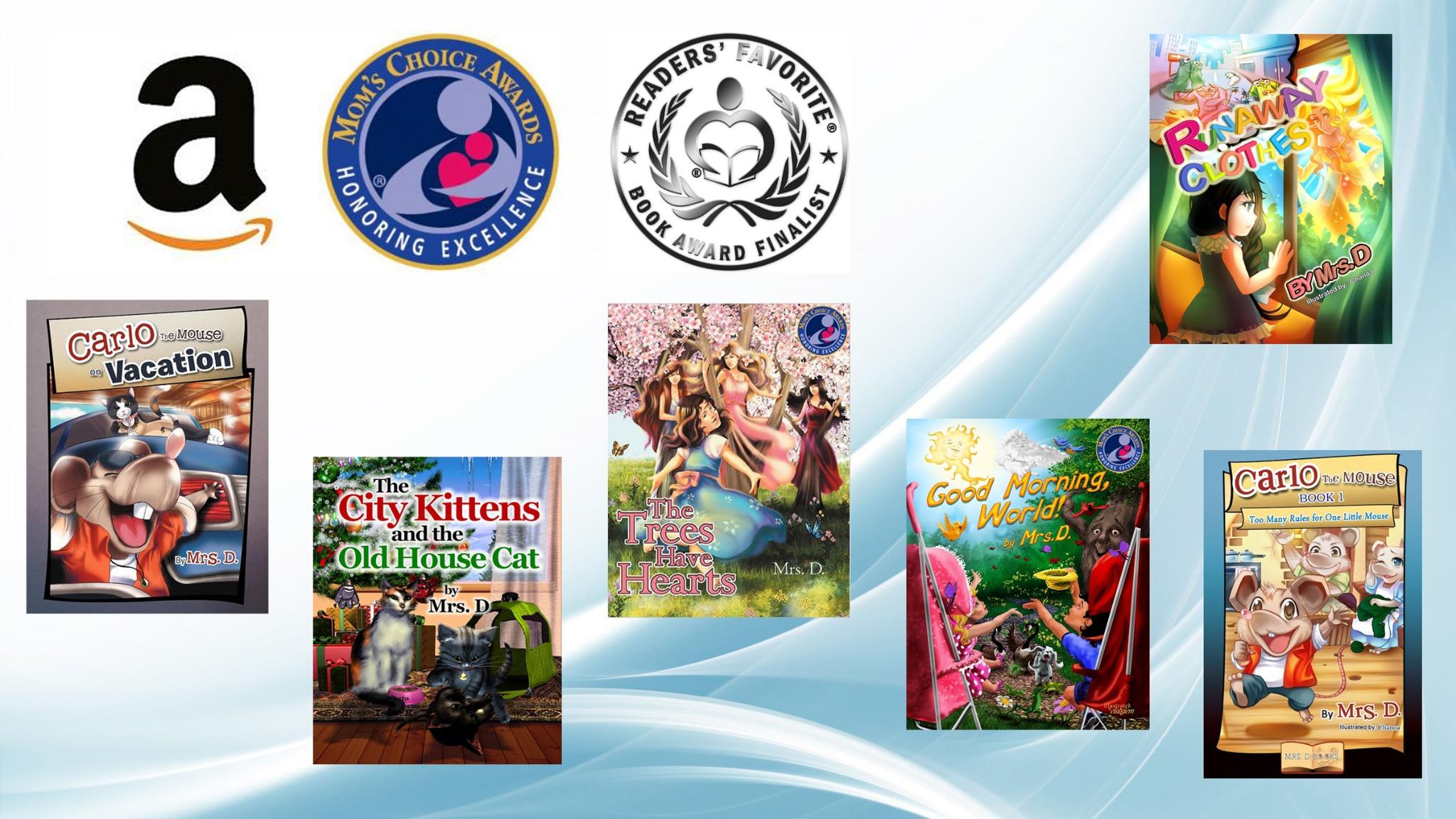
Critics often criticize children’s books that do not have happy endings. Good Morning, World!, my award-winning book, falls into this category. It almost landed me on the “Grandpa’s Hit List” because I made the character of the grandpa slightly grumpy and negative. This story takes the reader to the park, where Grandpa and his little grandson are taking a walk one fine morning. The day was hot, and Grandpa did not enjoy the outdoors as much as Baby Thomas did. Every little thing that amused Baby Thomas bothered grouchy Grandpa. Obviously, Grandpa woke up on the wrong side of the bed that morning. However, his little grandson had a wonderful time, while collecting “good mornings,” meeting people, animals, birds, and other creatures in the park.


Baby Thomas looked at the world through the eyes of an innocent child. Beautiful examples to all of us: Open your eyes and celebrate each moment! The world has so much to offer; we just must look for it as children do. Grandpa, on the other hand, did not share the baby’s happy attitude. He did not like the hot sun baking him like a cupcake. His negative disposition robbed him of the fun his grandson enjoyed so much. Sometimes we grown-ups fail to see the beauty this world has to offer. Often, I am as guilty as Grandpa.

Recently I submitted GoodMorning, World! for the 22nd Annual Writer’s Digest Self-Published Book Awards. I am perfectly okay that this book did not win an award. I am sure there are many great books that deserved this award. What I am not okay with is the judge’s statement about Grandpa’s character.  Why must Grandpa awake to the fact that he is missing the beautiful world around him? I purposely left this part for the children to discover. I want them to see what Grandpa is missing by being grumpy and unhappy. I want them to have a healthy conversation about their choices and behavior.

Judge’s commentary:
Good Morning, World! is an optimistic look at the world through the eyes of a toddler. The author has created a whimsical story full of positivity and humor that parents will no doubt appreciate. The illustrations are WONDERFUL and greatly support and contribute to the sense of beauty throughout the story. The ending is particularly rewarding as the reader experiences all the main character’s joy at once, all the “Good mornings” he picked up during his walk.

The repetition in the story is great, as is the contrast between Grandpa and Baby Thomas. That said, the reader is left wanting to see some character development/transformation in the Grandpa’s character. As scene-by-scene transpires, you can’t help but think that Grandpa’s eyes are opening to what he’s missing, especially when he sees himself reflected in the strolling mother-on-a-cellphone. But his eyes never do open, leaving the story feeling as though it stopped short.

Nonetheless, children will enjoy this title and LOVE the accompanying pictures. The author should be proud of this title!

I strongly disagree with this judgment. Grandpa experienced everything Baby Thomas did, but he chose not to see what his grandson was seeing. I am sure at one time he enjoyed this world as much as his grandson did. If he changes his mood and starts screaming “Good Morning” to everyone and everything he passes, will kids learn a greater lesson than if he complains about everything he sees? What is left to the child’s imagination and discussion if we chew every word for them? Recklessly, Grandpa already punished himself for missing all the fun that Baby Thomas had.


I am glad Good Morning, World! touches critics’ and readers’ nerves. I love mixed reviews. They prove that we need these types of books. We are often afraid to teach children real things. We want them to see the world through rose-colored glasses. But reality is not always rosy. I think we should be more honest with children about the real world, so they can be more prepared to face it one day. Children are like sponges, and of course, children’s writers must be very careful with their words. Like my kids and me, children will learn how to benefit from both types of books.

Readers have different tastes and views about the books they read. Writing this book, I wanted to show a different side of human nature. Busy with many things, we grown-ups often forget how to see the world through the eyes of a child. The character of Grandpa was exaggerated for a reason. The key message of this book is simple: each of us has a choice, whether to wake up happy or dismal. I also wanted to show children how two people seeing the same things can draw totally different conclusions. And, of course, I wanted children to have fun with the Grandpa character, which will show them how they may appear to others when they are grumpy.


Good Morning, World! is a book for children and parents who like to have a good discussion. This book is meant to spark a conversation about the attitudes we have and the choices we make. I hope that Good Morning, World! will remind people about the beautiful world outside and that we should let our children interact with nature more often.

PS. GoodMorning, World! was my observation of people and nature during my morning walks in the park. As a children’s writer, I try to create books that will mold the minds of children, forcing their brains to read between the lines, which they must do throughout their lives.


Good Morning, World! is a two time award-winning children's book 


Thank you very much for reading my post! 
Best wishes…
Mrs. D. 

Tuesday, November 4, 2014

A Valuable Educational Tool for Children


Just like Barbara and Victor Mojica’s three previous children’s history books, their most recent work, Little Miss History Travels to Ford’s Theater, is a wonderful addition to the treasury of children’s books on American history. All four of their books are written in an easy-to-follow language for children. The illustrations are breathtaking and the story of Ford’s Theater captures and stimulates young minds and provides a foundation for children to begin to appreciate what it means to be an American. 

Writing this type of children's book, this talented team succeeds in providing the children of America with a much-needed lesson about American history. Through the well-written stories and astonishing artwork, they teach children what is good and virtuous. This is a wonderful educational book for children of any age to become familiar with the people and historical events that helped shape our great nation. All their stories are inspirational and guided by a moral purpose. Our children need to know about the past of our great country that they are privileged to live in.

Well written and illustrated, Little Miss History Travels to Ford’s Theater will help much younger children understand the history of America. The simplicity of the writing and length of this story make it perfect for a bedtime story. The historical facts are a great introduction to the story of our country and national heritage. Excellent vehicle for teaching our youngsters values that America was founded on. A truly wonderful addition to any teacher or parent's library, as well as excellent enrichment to any social studies curriculum. It is a captivating children's book on history that will shape a child's knowledge and make children proud to be citizens of the United States. Congratulations on another wonderful history book for our children! Your books are really inspiring and will be read by many.


Books That Teach Children American History

by  Mrs. Barbara Ann Mojica  (Author) ,  Mr. Victor Ramon Mojica  (Illustrator)

Image of Barbara Ann Mojica

Biography

Barbara Ann Mojica is a historian and retired educator. She writes historical articles for the Columbia Insider under the banner "Passages." Using the whimsical character Little Miss History, Barbara hopes to inspire children to learn about historical people and places. Little Miss History's antics make reading nonfiction and fun-filled adventure. "Little Miss History Travels to MOUNT RUSHMORE is her first stop. Our next journey to The Statue of Liberty is NOW AVAILABLE!


VICTOR RAMON MOJICA was born and raised in Manhattan, New York, but has lived in the Hudson Valley region since 1986 and now resides in Craryville, New York with his wife Barbara. He is an illustrator, cartoonist and writer with such works to his credit as the critically acclaimed, comic book series eugenus® ... The Next Step In Human Evolution!, which he created, wrote and illustrated. Victor has now written and illustrated his first children's book titled Captain Crossbones(™) in The Treasure Hunt, based on the comic strip appearing in The Columbia Insider, Pat Fisher and Ed Pollack, Publishers.


A fun children's book, which educates children about American history.


Once again, Little Miss History takes readers on an exciting voyage through time!

Little Miss HISTORY Travels to The Statue of Liberty (Volume 2)


A charismatic and very captivating children's book!


I absolutely adore Little Miss History, with whom I’ve already developed a special bond. I cannot wait to see where she will take me next. The “Little Miss History” series is number 1 on my list when my grandsons will be old enough to read these books.

My recommendation to parents, grandparents, teachers, and librarians: chose these books! You have nothing to lose and so much to gain. They are fun to read, great for children, and full of historical facts and educational lessons. I read them just for extra knowledge! It is never too late to learn! Crafted by a very talented team, Mr. and Mrs. Mojica, these books have so much to offer. Give your child a gift—knowledge.

Delightful read from Barbara Ann and Victor Ramon Mojica!

Authors of the Little Miss HISTORY series:
Little Miss HISTORY Travels to MOUNT RUSHMORE
Little Miss HISTORY Travels to The STATUE of LIBERTY
Little Miss HISTORY Travels to SEQUOIA NATIONAL FOREST
Little Miss History Travels to Ford’s Theater - NEW

WWW.LittleMissHISTORY.com


Wednesday, August 27, 2014

Captain CROSSBONES in The Treasure Hunt by Victor Ramon Mojica


Victor Ramon Mojica has found a fun and different way of telling your children that they are your greatest treasure! In a beautifully illustrated children’s picture book, written in rhyme, and titled Captain Crossbones in The Treasure Hunt, Victor has woven an exciting adventure for hidden treasure that will delight you, along with its rhyming text and special message of love! Captain Crossbones in The Treasure Hunt is a book every parent, grandparent, teacher and guardian will want to read to their children, over and over again.


Mrs.D's thoughts…

Grab your pirate hat, because you are in for a laugh-out-loud fun read! A beautifully illustrated gem from the talented artist and author Victor Ramon Mojica.


I must admit I am a longtime fan of Mr. Mojica’s art. I read the series of children’s books Little Miss History, illustrated by this gifted artist, and they are adorable!


Most of us remember building sand castles and ships, pretending to sail through the dangerous ocean to deserted islands, guarding treasures and secrets. It felt great to be whisked away for a moment by a super-cool pirate, battling seas full of unpredictable adventures. We felt thrilled and excited when our imagination took us to deserted islands, protecting gold and gems, or wherever the journey led us. Mr. Mojica has captured the wonderful spirit of a pirate tale in his colorful children’s book, Captain Crossbones in the Treasure Hunt. He sets young readers off to the sea to solve the mystery of hidden treasure. The illustrations are vivid and fun and express everything a young child is yearning for—sailing on a cool ship and meeting intriguing pirates. The crew of Captain Crossbones is AWESOME! What follows the illustrations is a fantastic rhyming tale dedicated to all the children in the world. What could be better than that?


A wonderful book for young children and adults who are looking to spend quality time together and share fun and good laughter! A well-written, bouncy story with thoughtful, bright illustrations that will entertain and engage any age. I highly recommend this imaginative book for children who love adventure, pirates, and the sea. Bravo on engaging readers throughout the story with a brilliant ending, which made me feel special and cozy inside. A super-exciting treat for readers!

Biography


VICTOR RAMON MOJICA was born and raised in Manhattan, New York, but has lived in the Hudson Valley region since 1986 and now resides in Craryville, New York with his wife Barbara. He is an illustrator, cartoonist and writer with such works to his credit as the critically acclaimed, comic book series eugenus® ... The Next Step In Human Evolution!, which he created, wrote and illustrated. Victor has now written and illustrated his first children's book titled Captain Crossbones(™) in The Treasure Hunt, based on the comic strip appearing in The Columbia Insider, Pat Fisher and Ed Pollack, Publishers.


Volume I, “Captain CROSSBONES for LAUGHS” is a composite of cartoon strips, published between 2010 – 2012, in The Columbia Insider, Pat Fisher and Ed Pollack, Publishers. This is the most comprehensive collection of cartoons and character descriptions ever compiled so far on the Captain CROSSBONES comic strip. Read on and you well get to know The Captain of The Lunacy and his crew of boneheads as never before and chuckle a little, or a lot, along the way!


Saturday, August 2, 2014

FINALISTS IN THE READERS' FAVORITE CONTEST


AH! What a beautiful moment! I am over the moon! 

I am so thrilled that my two children's books The Trees Have Hearts and  Good Morning,World! are FINALISTS IN THE READERS' FAVORITE CONTEST !!

Good Morning, World! is A FINALIST IN THE READERS' FAVORITE CONTEST in both categories:Children - Preschool and Children - Concept. 
Go Baby Thomas!

The Trees Have Hearts is A FINALIST IN THE READERS' FAVORITE CONTEST in both categories also : Children - Grade K-3rd and Children - Educational

 Honored! Cross your fingers!

I am so excited to officially announce that my first short story, The Little Girl Praying on the Hill, is a finalist in the 2014 Readers' Favorite annual International Award Contest also! The Little Girl Praying on the Hill made it to the finals in both categories as well: Non-Fiction - Short Story and Non-Fiction - Inspirational. 

 What an honor for a girl from the Carpathian village in Ukraine, who could hardly write a shopping list three years ago. I do not want to wake up...Someone pinch me! Read more HERE: https://readersfavorite.com/2014-finalists.htm


  • 5 STAR REVIEWS

    5.0 out of 5 stars A Little Slice of Life in the "Good Old Days", June 26, 2014
    Verified Purchase(What's this?)
    This review is from: The Little Girl Praying on the Hill (Kindle Edition)

     “The Little Girl Praying on the Hill” by Olga D’Agostino is rather a unique story in which a young girl narrates to readers an overview of her life as she was growing up. The girl resided in an agrarian society, served by a small town, with a single church situated high on a hill. 


    As should be the case, the opening sentence in this book sets the stage for the rest of the tale. That sentence is: “I was born in a strange place, beautiful to look at but hard to live in.” Throughout the story our young narrator juxtaposes her vivid descriptions of the natural world around her, with her laments of the harsh life faced by villagers and farmers alike. 


    This story is not a book children will appreciate, nor is it a full blown novel for adults. In both content and character, it is well suited to middle-grade students, and possibly of greater interest to girls than boys, although that is my own prejudice coming into play. (Hey, I’m old. What did you expect?)


    “The Little Girl Praying on the Hill” is a very realistic cameo of post-WWII rural European life. In that regard it should also be of considerable interest to history buffs, particularly those who are most intrigued by that time and place. The apparent lack of any “modern” conveniences in the context of this story also serves to make it relevant to many places in today’s world, where people still live much the same as did their ancestors hundreds of years previously.


    At no point in this story did D’Agostino suggest she was telling of her own childhood, or possibly her mother’s childhood. However, if I were a gambling man I’d be happy to lay down a bet that such is the case. I was expecting a children’s book, as that is what D’Agostino usually writes, but finding a little slice of life at a different time and place was a most delightful surprise.


    I cannot decide which genre best fits this story. That notwithstanding, I can and do recommend this as being both entertaining and educational. All readers with an interest in the so-called “good old days”, or intrigued by how different life was before iPads and Facebook, should take the time to read and savor “The Little Girl Praying on the Hill” by Olga D’Agostino. It may help you keep your own life challenges in perspective.


    5.0 out of 5 stars
     Kitty Muse Book Reviews April 30, 2014
    By K. Ree
    Format:Kindle Edition
    She spent a lot of time alone, or so it seemed to the people in the village below. Every day, she would take the sheep up to the top of the hill, where she would spend hours.


    In her mind, though, she was not alone. She spent hours with her friends–the princess in her glorious cloud castle, and the mercurial companion, the wind, who sometimes teased, sometimes tormented her. Life was good–


    –until her daydream was interrupted by a furious someone who angrily reminded her about forgotten chores.


    Back to the sad reality–a life in the mud, surrounded by poverty and hopelessness. There was little room for sadness; when her younger sister died, her own dress was taken for the burial. The little girl mourned only for the dress that had been taken away from her. There were no tears for the sister.


    In a world where despair reigns supreme, a child’s mind turns to prayer. But when the help isn’t immediate, faith must carry her through the difficulties of an “unfair” life.


    I have read several of Ms. D’Agostino’s books, and this has to be, by far, my favorite. None of the whimsy and cuteness of her previous books are in this offering. However, her light-handed way of writing turns what could be a dark and depressing time in her childhood into something magical. The little girl, obviously the author, has a gift for daydreaming; which naturally led her, as an adult, to her gifted ability to tell a tale like this. The reader can’t help but be absorbed into the story. With prose such as:


    “My wind was a mysterious friend. He was a most virtuous player. I loved watching him play with the green grass that grew near the forest. He played his music with a gentle whisper, taking my breath away. When he hit a higher note and touched his invisible strings with his tender stroke, the green grass strained like arrows, making the most wonderful sound that rang in my ears the entire day.”,


    how can one not be captivated? Such descriptions! No wonder Ms. D’Agostino is an award-winner.

    5.0 out of 5 stars
     This moving story made me think., April 28, 2014
    By 
    Olga Guseva (Russia, Moscow) - See all my reviews
    Verified Purchase(What's this?)
    This review is from: The Little Girl Praying on the Hill (Kindle Edition)
    I am a long time fan of Mrs. D. children's books. I was quite surprised to find out that she is writing for the older audience also. The Little Girl Praying on the Hill is the heartfelt story of a little girl, who was born on a farm in the Soviet Union in the post WW II era. The story describes the life of an innocent child, who tries to survive heartbreaking reality by escaping into her imaginary world, filled with beauty and kindness. A world where there is no place for evil, hate, or pain. People call her strange, because she is different from the children in her village. Unlike other children who resigned to the sad existence, the little girl has a hard time to accept her real world. Two parallels of her world are running closely to each other. One escapes ahead and opens her soul, and lets out pieces of her painful memories. The desperate child questions God. Why the real world does not look the same, as it exists in her imagination, untainted and innocent? Why does she look to escape into unreachable places? Why does God punish her people? The first parallel exposes the happy moments of her life, but her second parallel is catching up with her poignant memories, full of sadness and pain. Her innocent imagination distracts her from the sad world, but the second she opens her eyes, the visible line between beauty and ugliness leaves nothing, except emptiness.
    In a short period, the author opens up two worlds to the reader, the beauty and kindness, the sadness and the ugliness. Just like parasites, her two emotions feed on each other. The beauty complements the ugliness; the happiness complements the hopelessness. By creating the beautiful imaginary world, Mrs. D'Agostino purposely distracts us from her depressing reality, full of bitterness and frustration. Before we know, she plunges us back into the misery of the little girl's life, filled with desperation and disappointments. With each page, I relived the life of the struggling child, overwhelmed with the factual world. It amazed me how the search for love and acceptance made the little girl realize her journey. I absolutely love how the author portrayed the little girl's imaginary friends. I felt as if the wind became my friend, the wheat field became my home, and the sky became my escape. The author surrounds the reader with astonishing imaginary pictures and sad reality at the same time. When the little heroine flows in her beautiful imagination, I cheered her up, but when she must return to the dreary life, I felt crashed. This soulful story kept me in tension to the last word. It felt like a breath of wind, strong, emotional, and deep. It would not let me relax or become indifferent. The two worlds of the little girl beautifully complement each other; the personal made me cry, the imaginary lifted my soul up to heaven. I am glad I had a chance to relive the life of this little girl and discover a new Mrs. D. I read this short story a few times, just to feel the spirit, energy, and emotions. This moving story made me think.


    MORE FROM MRS.D!!